
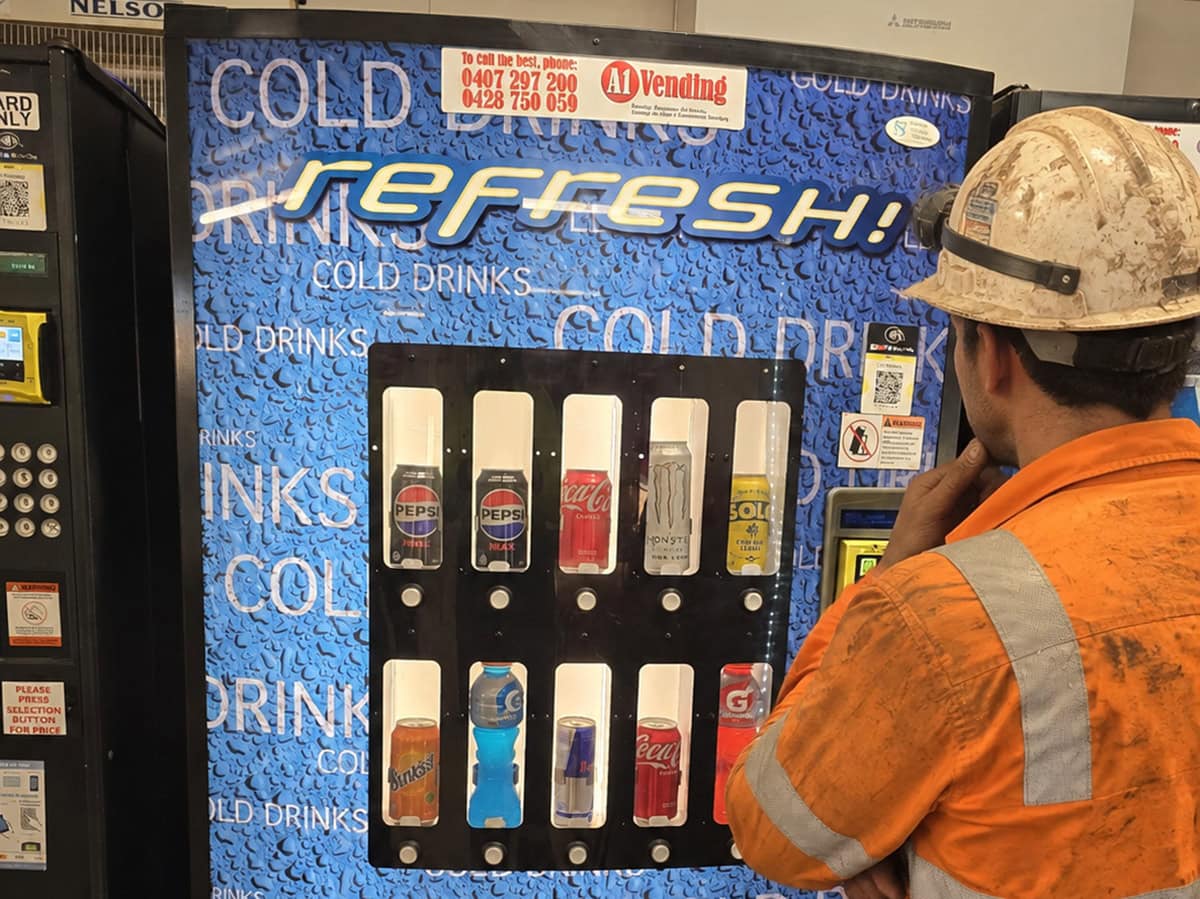
On a FIFO roster, changeover day is the biggest test a vending machine faces. Vending machine downtime on that day affects the most people at once, and the site manager hears about it first. A1 Vending has serviced Goldfields worksites from Kalgoorlie-Boulder since 1997. This guide covers what causes a machine to go quiet, how to keep downtime near zero through crew change and what to ask your supplier before the next roster turns over.
In short: vending machine downtime is any time a machine cannot complete a sale. That includes empty lines, failed payments, dispensing faults, or cooling faults. Planned servicing, restocking timed to the roster, and a clear fault process help reduce it. A1 Vending fault reporting is open 24 hours, and the local team works from the Kalgoorlie-Boulder base.
What vending machine downtime costs a FIFO site
Vending machine downtime is easy to underrate until crew change. A machine that is down on a quiet Tuesday costs a few sales. A machine down when a full crew arrives costs the site far more because everyone hits the fault in the same hour.
The cost isn’t just lost sales. A down machine becomes a complaint, and the complaint lands with the crib room, camp or site manager. Fixing the machine is rarely the manager’s job, but the call often becomes the manager’s problem. Less vending machine downtime means fewer calls like that.
Why changeover day puts the most pressure on a machine
On a FIFO site, one roster leaves and another arrives. People travel in, get settled and head to the crib room or camp for a cold drink or a snack. Demand bunches into a short window instead of spreading across the day.
That bunching exposes every weak point. A line that was one sale from empty runs out. A card reader that was slow becomes a queue. An unnoticed cooling fault means warm drinks for a full crew. Changeover day does not cause faults. It finds them.
How a failed payment turns into a site problem
Payment faults are the most visible kind of vending machine downtime episode. The machine looks fine, the screen is lit, and the product sits on the shelf, but the sale does not go through. The guide on what to do when a vending machine payment failed explains the steps for the person standing at the machine.
Site managers need a different view. One vending machine payment failed report is usually a one-off. A run of them on changeover day points to a reader, a connection or a machine that needs attention before the next crew arrives. Where machines support remote monitoring, you can spot that pattern without waiting for someone to ring it in.
Remote sites often have patchy mobile signal, and a card reader depends on a connection to complete a sale. That is why connection planning and prompt fault reporting matter more on a remote run than in a city office.
The five ways a machine goes quiet
Managers do not need to diagnose a fault. It still helps to know the five usual causes of vending machine downtime:
- Empty lines: stock sold through before the next visit, often after a roster change that added extra people.
- Payment faults: a card reader that does not respond or a connection that drops.
- Dispensing faults: the payment is taken and the product does not drop.
- Cooling faults: a refrigerated machine that no longer keeps drinks cold, which matters most in Goldfields summer heat.
- Power or placement problems: a machine switched off, unplugged or sitting where heat and dust build up.
Planning can reduce most causes of vending machine downtime. A sudden component failure is the exception, and that is why a fast fault process matters.
How roster-based restocking removes empty-line downtime
An empty line is vending machine downtime that nobody calls a fault. The machine works. It just has nothing to sell. The fix is a roster-based plan, so machines are full when a crew arrives, not after.
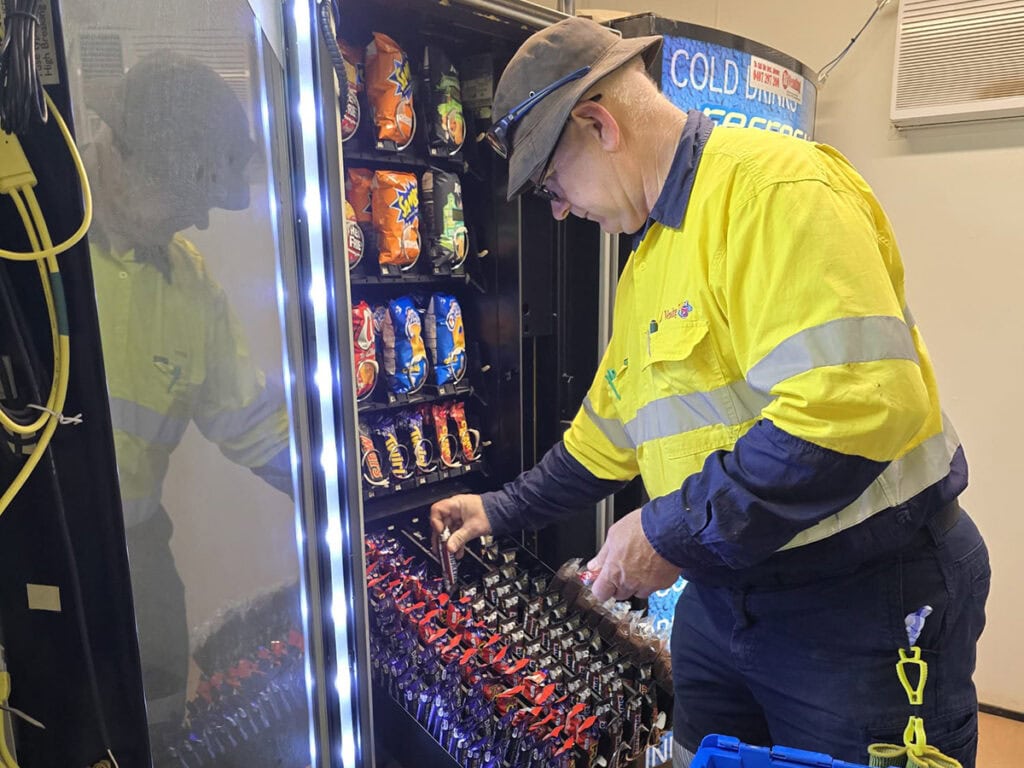
A1 Vending plans restocking around headcount, roster and run distance. Share your changeover dates and any shutdowns early, and we can load for the extra people. The full process is in the guide to a vending machine restocking service on remote WA sites.
What planned servicing catches before a fault does
Most breakdowns give small warnings first. A slow-to-respond reader, a compressor that runs louder, or a line that jams once a week can all point to a bigger fault. Regular visits give a technician the chance to catch these before they stop the machine on changeover day.
Planned vending machine maintenance also covers the simple things: airflow around the machine, dust on vents and coils, and a test of the payment reader. Those checks cost little compared with a failed machine in front of a full crew.
Where remote monitoring helps, and where it does not
Where a machine and site setup support it, remote monitoring shows faults and stock levels online. That lets a supplier see a problem sooner and arrive with the right parts. It can reduce the time a fault goes unnoticed, which shortens vending machine downtime.
Monitoring does not fix a machine on its own. Not every machine or site supports it, and a signal-poor site may limit what a machine can report. Ask any supplier which machines report online and what happens on sites that do not.
What happens when a fault is reported
Many managers search for 24/7 vending machine support because a fault never waits for office hours. At A1 Vending, fault reporting is open 24 hours. Reports go to the local team at the Kalgoorlie-Boulder base, where technicians, vehicles and parts start each day.
A1 Vending’s vending machine service technicians are inducted for mine sites, so we plan site access once a visit is arranged. Where the machine supports remote monitoring, some faults can be checked before anyone drives out.
Distance still matters. A site 600 kilometres from Kalgoorlie cannot expect a technician in an hour, and an honest supplier will say so. Good vending machine fault response on a remote run has three parts: a clear report, an early check where monitoring supports it and a planned visit with the right parts.
What the site contact can do to cut downtime
The site contact is the link between the crew and the supplier. A few habits make a large difference:
- Share changeover, shutdown and project dates well before they arrive.
- Nominate one contact, such as the crib room or camp manager, so reports do not get lost.
- Report each fault with the machine location, the time and what was being bought.
- Report small faults too, since a pattern is easier to fix than a breakdown.
- Tell the supplier when a machine moves or a crib room is reorganised.
None of this takes long. It gives the supplier the detail to plan, and it keeps the manager out of the middle.
A pre-changeover check for site and camp managers
A short check a few days before crew change catches most causes of vending machine downtime:
- Is each machine switched on, with the door closed and the display working?
- Are the cold drinks cold and the lines full?
- Has a test purchase gone through on the card reader?
- Is there clear space around the machine for airflow?
- Does the supplier know the changeover date and the expected crew size?
The walk-through takes minutes. If any answer is no, report it. Do not wait for the first crew complaint.
Questions to ask a supplier about faults and response
Five questions show how a supplier handles faults:
- How do I report a fault, and when is that line open?
- Who responds, and where are they based?
- How do you plan visits around our roster and changeover dates?
- Which machines report faults online, and what happens on sites that do not?
- Are your technicians inducted for mine sites?
With A1 Vending, fault reporting is open 24 hours, the team works from the Kalgoorlie-Boulder base, restocking is planned around headcount and roster, remote monitoring is used where machines support it and technicians are inducted for mine sites. For suitable sites, one supplier handles supply, installation, restocking and repairs.

Why a working machine matters on a FIFO site
WorkSafe WA publishes a code of practice on mentally healthy workplaces for FIFO workers in the resources and construction sectors. Rosters, travel and the camp environment are all part of life on a FIFO site. A working vending machine is a small part of that environment, but the site can control it with the right supplier.
Source: WorkSafe WA, Code of practice: mentally healthy workplaces for FIFO workers (Government of Western Australia).
How remote runs change the picture
City operators can often send a technician the same afternoon. On a long Goldfields run, a missing part or forgotten product can mean waiting until the next trip. Good practice is to plan the load for the whole route and carry the likely parts before the vehicle leaves.
Heat and dust add their own demands. Sheltered placement in a crib room helps protect the machine, and clear airflow helps a refrigerated unit keep up in summer. Placement is one of the few vending machine downtime factors a site controls directly.
Where this fits with A1 Vending’s other services
Preventing vending machine downtime sits across several services. Vending machine repairs cover faults when they happen. The service areas page lists the towns A1 Vending covers. For site-wide planning, see the guide to vending machines for remote WA sites.
About A1 Vending’s Goldfields service
A1 Vending is a family-owned Kalgoorlie-Boulder business that has served mine sites and industrial workplaces across the Goldfields and WA’s northern mining corridor since 1997. Fault reporting is open 24 hours, and technicians are inducted for mine sites. The team works from the same Kalgoorlie-Boulder base that has served Goldfields sites for almost three decades.
Frequently asked questions
How do I report vending machine downtime outside office hours?
A1 Vending’s fault reporting is open 24 hours, so you can submit a report at any time. Include the machine location, the time and what was being bought. That detail helps the team check the vending machine downtime faster.
Does vending machine downtime matter more during a shutdown?
It can. Shutdown crews arrive in numbers and expect the machine to work from day one. Share the dates early, so the load and service plan reflect the extra people. Planning ahead is the main way to limit vending machine downtime during a shutdown.
Who is responsible for vending machine downtime, the site or the supplier?
For suitable sites on A1 Vending’s managed service, the supplier handles restocking and repairs. The site provides a sheltered location, a power point, roster details, and promptly reports faults. That split helps keep vending machine downtime off the manager’s plate.
Can poor mobile signal cause vending machine downtime?
It can affect card payments, because a reader needs a connection to complete a sale. Signal-poor sites may see more failed payments than a city office. Reporting each one helps the supplier spot a connection issue at a specific location before it becomes a pattern of vending machine downtime.
Does a machine need restocking before every changeover?
Not always. Visits are based on headcount, roster, and run distance, then adjusted based on actual usage. Tell A1 Vending the changeover dates so the plan can be checked against them. A machine that starts each roster block full avoids empty-line vending machine downtime.
Keep your crib room machines working through every changeover
Less vending machine downtime starts with a plan that matches your roster: timed restocking, planned servicing, and a fault process open 24 hours. A1 Vending has run that way across the Goldfields since 1997.
Share your site location, crew size, roster pattern and next changeover date, and A1 Vending will confirm coverage and the service plan that suits your site.
Call 0407 297 200 | Email a1.vending@bigpond.com | Open 24 hours for fault reporting.
Vending Machine Restocking Service: How service runs reach remote WA sites
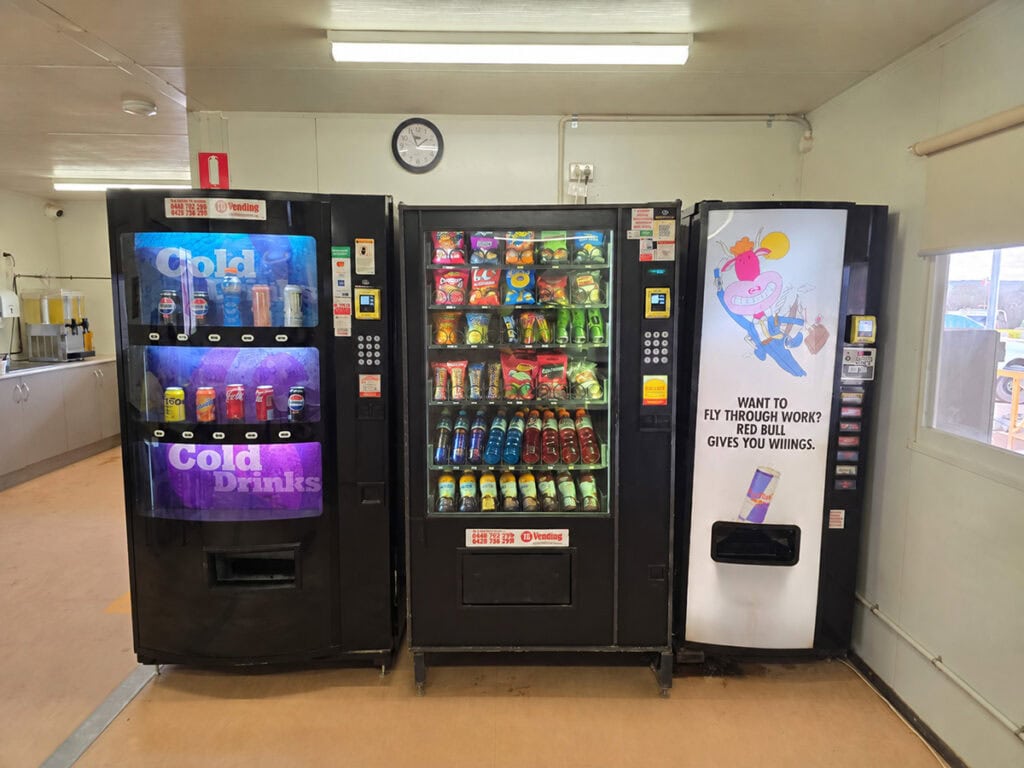
Free Vending Machine Requirements for WA Worksites: Does your site qualify?
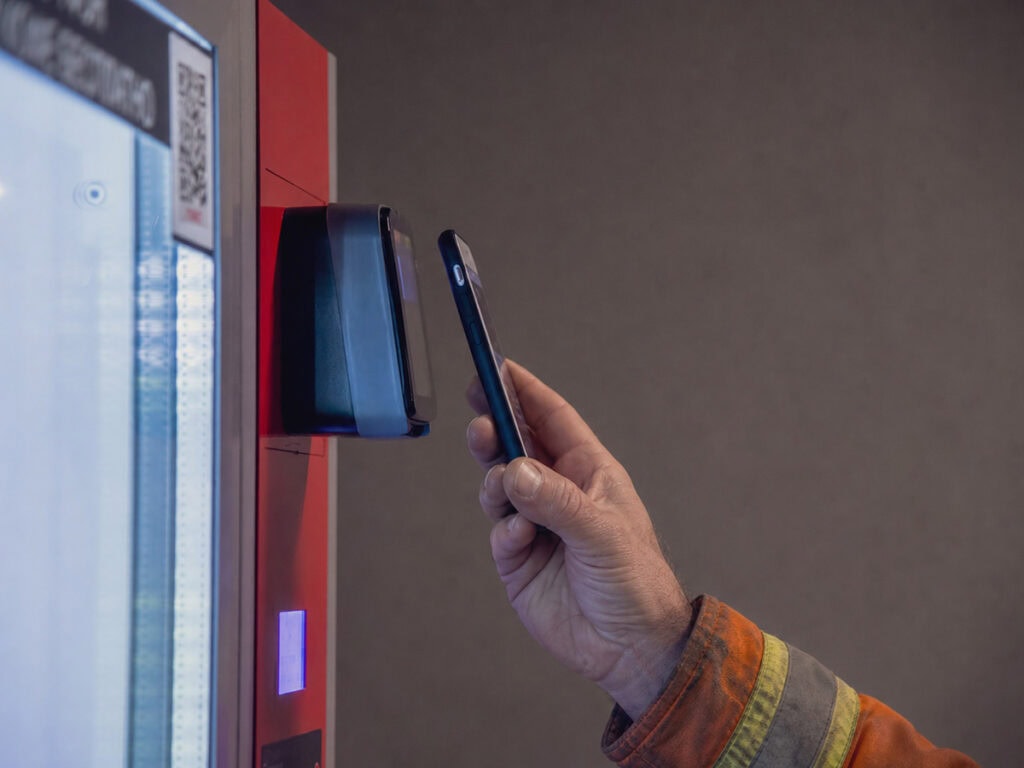
What to do if a vending machine payment failed
Join Our Blog
Join a community that cares - subscribe for insights and updates.
"*" indicates required fields