
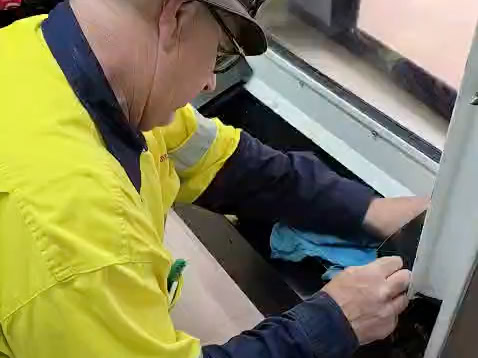
Most vending machine faults don’t appear out of nowhere. A machine that suddenly won’t take payment, or a cooling system that’s stopped keeping up, has usually been heading that way for weeks. Vending machine maintenance is the difference between catching that slide early and only finding out about it when a crew reports a warm drink or a jammed selection. Rather than waiting for something to break and then calling for a repair, preventative maintenance means checking, cleaning and servicing a machine on a planned schedule, so small issues get caught before they become the kind of fault that takes a machine offline.
A1 Vending has serviced vending machines across Kalgoorlie-Boulder and the WA Goldfields since 1997, and the pattern is consistent: machines on a proper maintenance schedule break down far less often than ones that only get attention when something already has gone wrong.
In short: vending machine maintenance is the planned checking, cleaning and servicing of a machine on a set schedule, aimed at catching wear and early faults before they cause downtime. On WA worksites, where heat and dust accelerate wear, it typically covers airflow, mechanical components, payment systems and seals, and reduces how often a reactive repair callout is needed.
What preventative vending machine maintenance actually covers
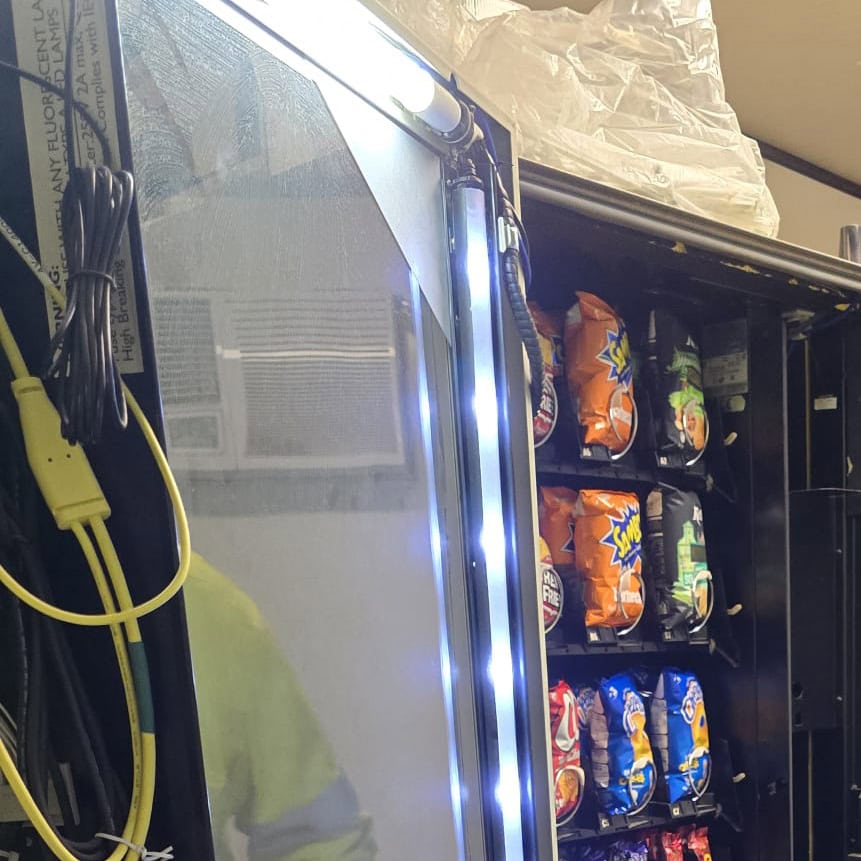
Maintenance isn’t a single task. It’s a set of routine checks that, done regularly, catch the small things before they turn into faults:
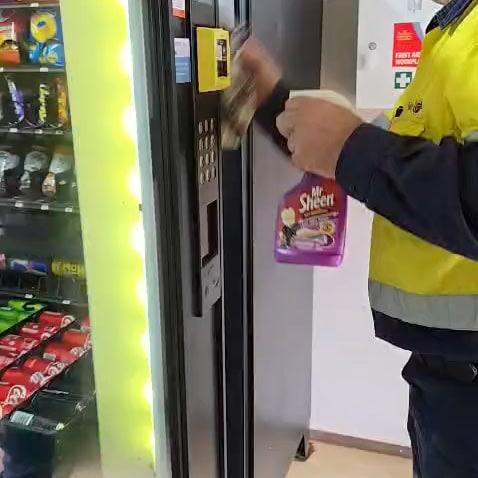
- Cleaning airflow paths and vents, since dust buildup is one of the most common causes of cooling and mechanical strain.
- Checking mechanical components, including coin and card mechanisms, product spirals and delivery mechanisms, for early signs of wear.
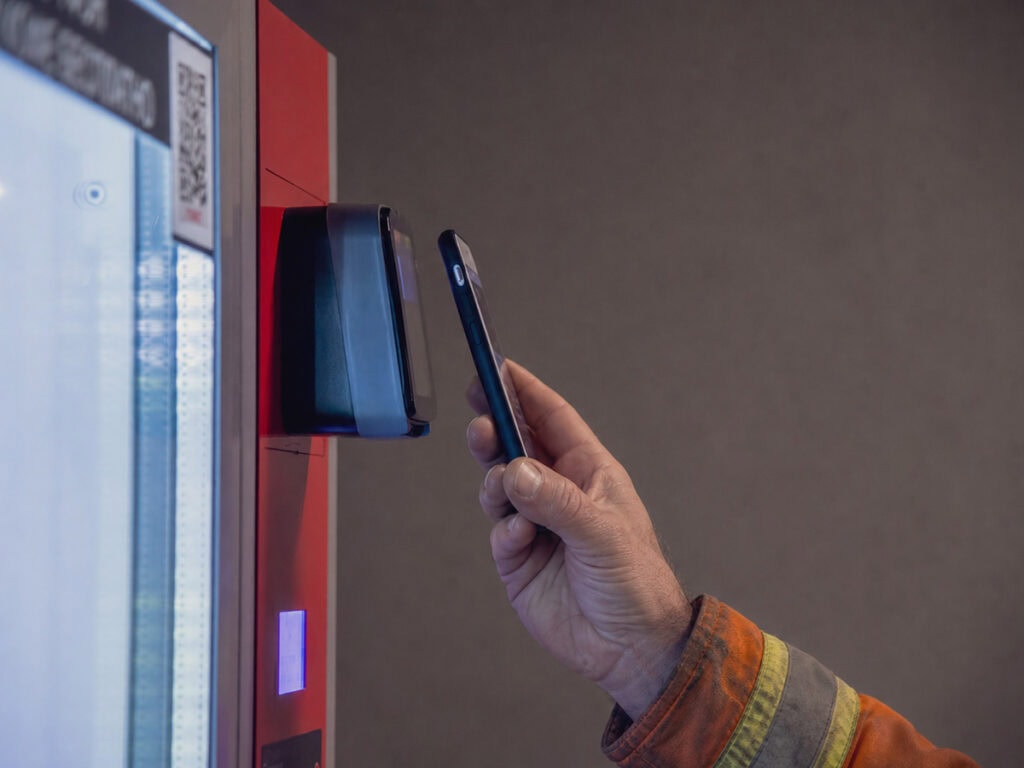
- Testing cashless payment systems to confirm card readers and connectivity are working properly, not just when a fault is reported.
- Inspecting seals and door mechanisms, which affect both security and how well the cabinet holds temperature.
- Reviewing fault history for a machine to spot a pattern before it becomes a recurring complaint.
None of this is complicated on its own. The value is in doing it on a schedule, rather than only when something has already stopped working. A machine that’s checked every few months, rather than left alone until it fails, tends to need less invasive work each time, since problems are caught while they’re still minor rather than after they’ve had time to compound.
How vending machine maintenance differs from a repair callout
It’s easy to lump vending machine maintenance and repairs together, but they solve different problems. A repair callout is reactive: something has already gone wrong, and the priority is getting the machine back online as fast as possible. Our general guide to vending machine repairs covers that side in detail, including common faults and what to check before calling a technician.
Vending machine maintenance is the other half. It’s planned, scheduled and proactive, aimed at reducing how often a repair callout is needed in the first place. A site that only ever deals with repairs is always one step behind. A site with a maintenance schedule in place tends to see fewer faults and less downtime overall.
Why prevention matters more on WA worksites
Heat, dust and heavy daily use all accelerate wear on a vending machine, and WA worksites tend to have all three in greater supply than a typical city office. A machine that could go a year between issues in a mild, low-traffic setting might need attention every few months on a busy mine site or construction yard. That’s not a reason to avoid vending machines in these environments, it’s the reason preventative maintenance matters more here than it would somewhere less demanding. Skipping it doesn’t remove the wear, it just means the wear shows up as a fault instead of being caught early.
Signs a machine needs maintenance sooner rather than later
A few signs are worth acting on before they turn into a full fault:
- A machine running louder or working harder than it used to, even if drinks are still cold.
- Slower dispensing, or products occasionally sitting at an angle after a vend.
- Card payments that take longer to process than they used to.
- Visible dust buildup around vents or the base of the machine.
- A pattern of minor faults being reported more often than they used to.
Any one of these on its own might be nothing. Several together, or a pattern over a few weeks, is usually worth a vending machine maintenance visit rather than waiting for an outright fault.
How often should a vending machine be serviced?
There’s no single answer that fits every site. A machine in a low-traffic office running in air-conditioned comfort needs far less frequent attention than one in a dusty workshop running multiple shifts a day. The practical approach is to base the vending machine maintenance schedule on usage, environment and fault history, rather than applying the same fixed interval to every machine regardless of how hard it’s working.
What a vending machine maintenance visit actually looks like on site
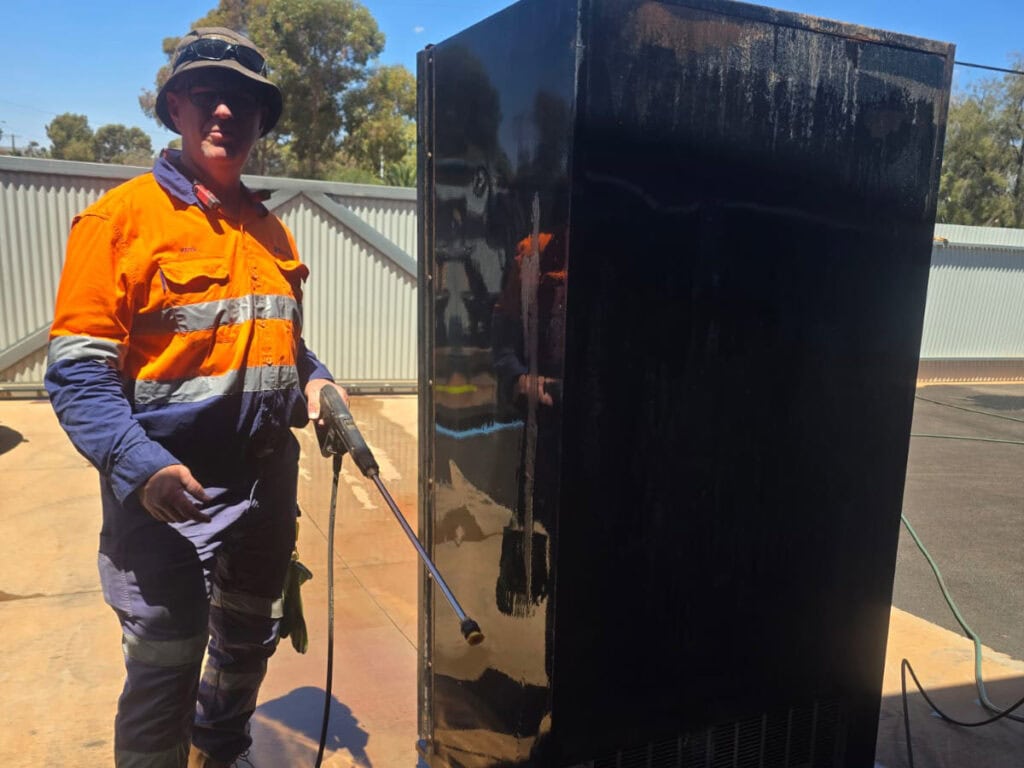
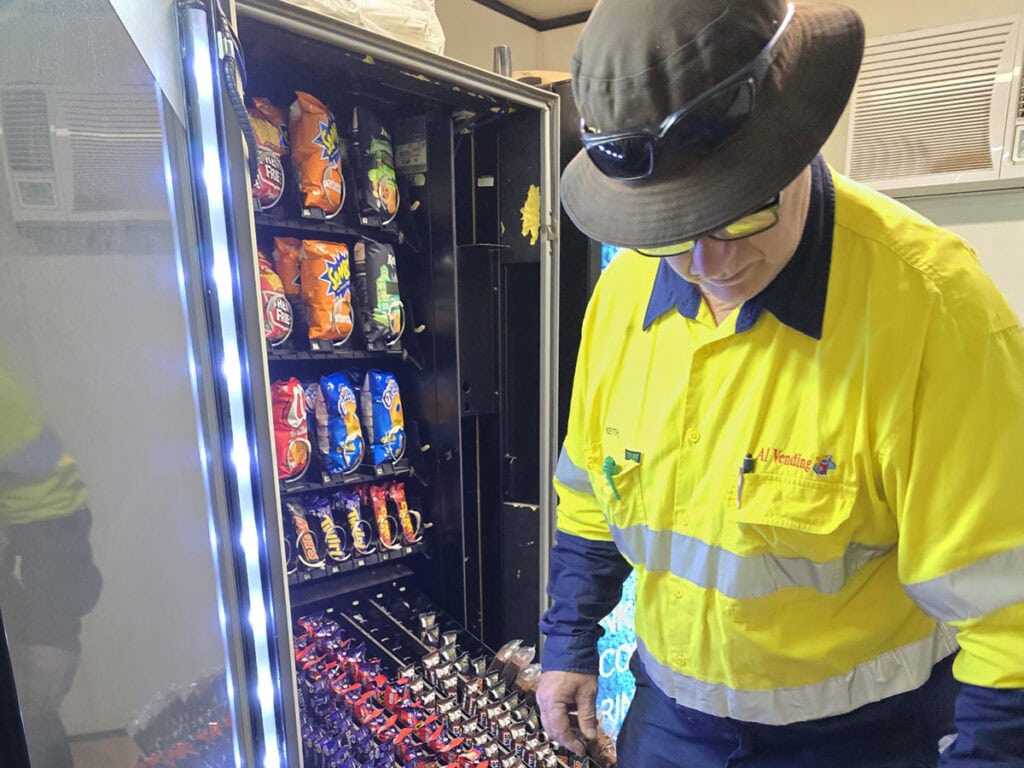
A vending machine maintenance visit is usually quick and doesn’t require the machine to be taken offline for long. A technician checks airflow and clears any dust buildup, tests the payment system end to end rather than just visually inspecting it, checks mechanical wear points on the delivery mechanism, and reviews the machine’s recent fault history before deciding whether anything needs closer attention. On most visits, nothing urgent is found, and that’s the point. A maintenance visit that finds nothing wrong isn’t wasted effort. It’s confirmation that the schedule is working.
Where a visit does turn up something worth addressing, whether that’s a worn seal, a card reader that’s started responding slowly, or a build-up of dust that’s affecting airflow, it gets handled as part of that same visit wherever possible, rather than requiring a second trip.
Moving a site from reactive repairs to a vending machine schedule
Many workplaces only think about vending machine maintenance after a run of repair callouts starts to feel excessive. Moving from a purely reactive setup to a scheduled maintenance arrangement doesn’t require replacing the machine or overhauling the service agreement. In most cases, it’s simply a matter of agreeing on a maintenance interval based on the site’s usage and conditions, and having that built into the existing service relationship.
Sites that make this switch typically notice fewer repeat faults within the first few maintenance cycles, since the same routine checks that prevent new issues also tend to catch anything already building up. It’s a gradual improvement rather than an instant fix, which is part of why it’s easy to keep deferring, but the earlier a site moves to a scheduled approach, the sooner it stops feeling like the machine is only ever one step from a fault.
Maintenance across a mixed fleet of machines
Sites running more than one vending machine, a snack unit and a drink machine, or several combo units across different crib rooms, don’t necessarily need the same vending machine maintenance interval for every machine. A drink or combo machine with a refrigeration system generally benefits from more frequent airflow checks than a snack-only unit, simply because it has more components working under load. Usage also varies across a site: a machine in a high-traffic crib room wears differently to one in a quieter office area, even if they’re the same model. A practical maintenance schedule accounts for these differences rather than applying one blanket interval across every machine on site regardless of type or location.
Preventative maintenance and worksite conditions
Under Australian work health and safety guidance, plant and equipment used at a worksite should be kept well maintained and regularly inspected, which is the same principle preventative vending machine maintenance is built on.
Source: Safe Work Australia, Plant and machinery (Commonwealth of Australia).
A vending machine isn’t classified the same way as high-risk plant, but the underlying logic holds: equipment that’s regularly checked tends to fail less often, and less dramatically, than equipment that’s only looked at when something goes wrong.
What happens if vending machine maintenance gets skipped
Skipping vending machine maintenance doesn’t usually cause an immediate problem. That’s part of what makes it easy to defer. The cost shows up later, in the form of more frequent repair callouts, faults that take longer to diagnose because there’s no baseline to compare against, and components that fail outright instead of showing early warning signs first. A machine that’s been maintained consistently is also generally faster for a technician to diagnose when something does eventually go wrong, since there’s a known service history to work from.
There’s also a quieter cost that’s easy to overlook: a machine running just below its best, slightly slower payments, slightly less cold drinks, rarely generates a formal complaint, but it does generate a steady trickle of minor frustration for the people using it every shift. Preventative maintenance addresses that gap even when nothing has technically failed yet.
A1 Vending’s approach to preventative maintenance in WA
A1 Vending has built preventative maintenance into its managed-service model for machines across Kalgoorlie-Boulder and the WA Goldfields since 1997, under Keith Wilkinson. Maintenance is scheduled alongside restocking runs where practical, so a technician is already on site rather than requiring a separate visit. Vending machine servicing and restocking are planned together wherever it makes sense to, which keeps disruption to a minimum. Fault history is tracked per machine, so a pattern of minor issues gets flagged rather than treated as one-off complaints.
Where A1 Vending services WA workplaces
A1 Vending is based in Kalgoorlie-Boulder and services workplaces across the Eastern Goldfields hub (Kalgoorlie-Boulder, Coolgardie, Kambalda, Southern Cross and Marvel Loch) through to the northern mining corridor, including Leonora, Leinster and Laverton. For workplaces beyond these hubs, structured service runs and remote monitoring mean A1 Vending can often support sites further afield. The best way to confirm coverage is to share your location and A1 Vending will advise what’s practical.
Frequently asked questions
Does preventative vending machine maintenance cost extra on top of the managed service?
For suitable workplaces, preventative maintenance is built into A1 Vending’s managed-service model rather than billed as a separate add-on. It’s part of how the service is planned around a site, not an optional extra.
Can a maintenance visit be scheduled around our shift patterns to avoid disruption?
Yes. Maintenance is generally planned alongside restocking runs, and timing can be discussed to fit around shift patterns or quieter periods on site, rather than being fixed to a rigid schedule regardless of usage.
If a machine is on a maintenance schedule, does that change how faults are reported between visits?
No. Faults are still reported the same way at any time, regardless of when the next scheduled maintenance visit is due. Vending machine maintenance reduces how often faults happen, but reporting a fault as it occurs is always the right first step.
Do we need multiple machines on site to get a maintenance schedule, or does it apply to a single machine too?
A vending machine maintenance schedule applies just as well to a single machine as it does to a larger site. The schedule is based on that machine’s usage and environment, not the total number of machines on site.
Are consumables like filters replaced as part of a maintenance visit?
Where a component like a filter needs replacing as part of routine servicing, that’s addressed during the maintenance visit rather than left until it causes a fault.
Keeping vending machine maintenance ahead of the next fault
Vending machine maintenance is the practical difference between catching a small issue early and waiting for it to become a fault that takes a machine offline. On WA worksites, where heat, dust and heavy use accelerate wear, a planned maintenance schedule matters more than it would in a milder environment. A1 Vending has built preventative maintenance into its managed-service model across Kalgoorlie-Boulder and the WA Goldfields since 1997.
Tell A1 Vending about your site and current machine setup, and they’ll advise on a practical maintenance schedule.
Call 0407 297 200 │ Email a1.vending@bigpond.com │ Open 24 hours for fault reporting.
What to do if a vending machine payment failed
Vending machine refrigeration & cooling faults in WA heat
What’s the Best Vending Machine Service for WA Workplaces?
Join Our Blog
Join a community that cares - subscribe for insights and updates.
"*" indicates required fields