
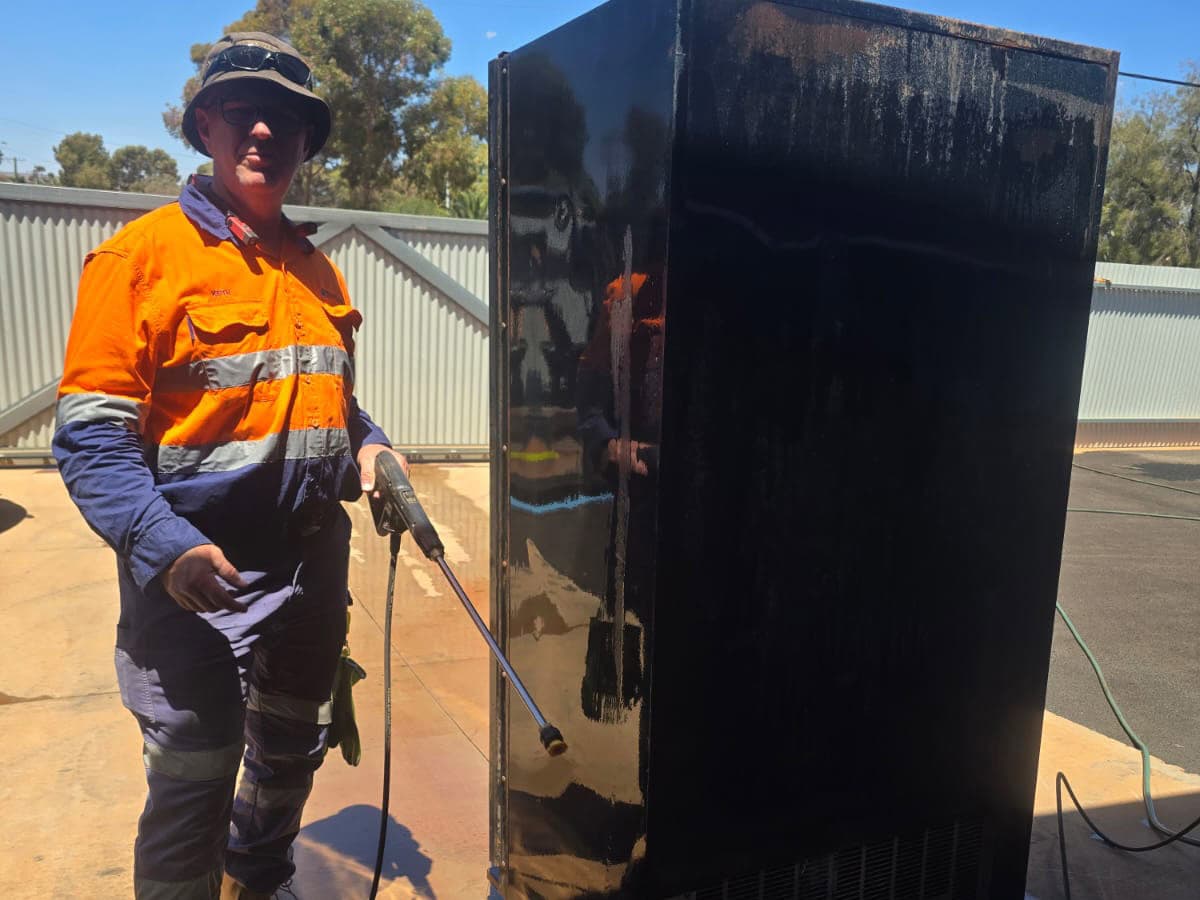
When a vending machine’s refrigeration system falls behind in WA’s heat, the fault shows up as one thing: warm drinks. But vending machine refrigeration faults rarely start with the drinks themselves. They usually trace back to the cooling deck, the refrigeration unit built into the base or rear of the cabinet, working harder than it’s designed to in extreme temperatures, dust, or a spot with poor airflow. On mine sites and worksites across the Goldfields, where summer days regularly push past 40 degrees, a cooling deck under that kind of strain is one of the most common faults A1 Vending is called out for.
A1 Vending has serviced vending machines across Kalgoorlie-Boulder and the WA Goldfields since 1997, and the pattern holds every summer: heat doesn’t just make drinks slower to chill, it accelerates wear on the exact components responsible for keeping them cold.
In short: vending machine refrigeration faults in WA heat almost always trace back to the cooling deck struggling against high temperatures, dust and poor airflow, not the drinks themselves. Common signs are drinks that are cool rather than cold and a compressor running constantly, and the fix is usually a straightforward service visit if it’s caught early.
What actually causes vending machine refrigeration faults in WA heat
A vending machine’s refrigeration system draws power to run a compressor and condenser that need clear airflow to shed heat, working inside a compact cabinet rather than a temperature-controlled room. When ambient temperatures climb into the high 30s and 40s, which the Goldfields sees regularly through summer, the refrigeration system has to work harder just to hold the same internal temperature it would reach easily on a mild day.
Dust makes it worse. It settles on condenser coils and blocks the airflow the system relies on to release heat, and the cooling deck starts falling behind. The result is a machine that runs constantly, works harder than it should, and still can’t quite keep drinks as cold as usual.
Whether it’s called a refrigeration fault or a soft drink machine repair, the cause is usually the same. On a modern vending machine, a warm drink almost always comes back to the refrigeration system, not the drink itself.
Placement compounds the problem. A machine standing in direct sun, hard against a wall with no clearance, or crammed into a poorly ventilated shed is fighting two heat sources at once: the ambient temperature outside the cabinet, and the heat the refrigeration system itself needs to expel. Vending machine cooling faults are rarely caused by one single failure. They’re usually heat, dust and restricted airflow compounding over time.
Signs of a refrigeration fault, and how it differs from other faults
Warm drinks are the obvious symptom, but not every fault that leads to a warm drink is a refrigeration fault. A machine with no power at all, a jammed selection, or a card reader that won’t process payment can all look similar to a customer standing in front of it, frustrated the drink they wanted isn’t cold. The signs that point specifically to a vending machine refrigeration fault include:
- Drinks that are cool but not properly cold, rather than fully warm, suggesting the system is struggling rather than off entirely.
- The compressor running constantly, or louder than usual, without the machine ever quite catching up.
- A gradual decline over several days rather than a sudden change.
- The fault affecting all products in the machine rather than a single selection.
If the machine has no power, won’t accept payment, or a specific selection isn’t dispensing, that’s a different fault entirely. Our general vending machine repairs guide covers those more common issues in detail.
Quick checks before calling a technician
A few checks can rule out simple causes before a technician needs to be scheduled:
- Confirm the machine has clear airflow around the back and sides, with reasonable clearance from walls or other equipment.
- Check nothing is stacked against the machine or blocking the vents.
- Look for visible dust buildup on any external vents and note it for the technician.
- Confirm the machine isn’t sitting in direct, unshaded sun for extended periods.
- Note how long the fault has been happening and whether it’s affecting all products or just some.
None of these checks require opening the machine or touching internal components. They’re about ruling out the obvious before a technician makes the trip, so the visit is more likely to resolve the fault the first time.
Why WA heat makes refrigeration faults more common than other regions
Refrigeration systems are built to handle a normal operating range, and WA’s Goldfields regularly pushes past it. Kalgoorlie-Boulder’s climate includes extended summer stretches well into the high 30s and 40s, and the Bureau of Meteorology’s climate records for the region show just how far outside a mild range those temperatures sit.
Source: Bureau of Meteorology, Kalgoorlie-Boulder climate averages (Commonwealth of Australia).
For a vending machine sitting outdoors, in a shed, or anywhere without reliable shade, that heat load adds directly to the strain already placed on the refrigeration system by regular use. It’s a big part of why vending machine refrigeration faults show up more often on WA worksites than they would on a machine running in an air-conditioned office elsewhere in the country.
Do refrigeration faults only happen in summer?
Most vending machine refrigeration faults on WA worksites show up between November and March, when daytime temperatures regularly sit in the high 30s and 40s across the Goldfields. But a cooling deck that’s already under strain from dust or a tight installation spot can struggle even outside the hottest months, particularly during a run of unusually warm days in spring or autumn. A machine that’s coped fine through previous summers can still develop a fault if dust has been building up on the condenser over successive seasons without a clean, so a machine’s age and service history matter as much as the calendar.
This is also why a refrigeration fault that shows up outside peak summer is worth taking seriously rather than dismissing as a one-off. It usually means the system is already running closer to its limit than expected, and the next heatwave is likely to push it further.
Snack machines versus drink machines: does refrigeration matter the same way?
Not every vending machine on a site relies on refrigeration in the same way. A dedicated snack machine typically has no cooling system to speak of, since chips, chocolate bars and similar products don’t need to be kept cold, though extreme heat can still affect how chocolate holds up inside the cabinet. Drink machines and combo units, on the other hand, depend entirely on the refrigeration system working properly, which is why vending machine refrigeration faults are almost always reported on a drink or combo machine rather than a snack-only unit.
If a site runs a mix of machine types, it’s worth knowing which units actually have a cooling deck to service, since that changes what a fault on any given machine is likely to be.
The cost of leaving a refrigeration fault unresolved
A refrigeration fault rarely announces itself as urgent. Drinks that are merely cool rather than cold don’t look like an emergency, and it’s easy to let it run for a week or two before reporting it. In practice, an unresolved vending machine refrigeration fault usually means the system is working harder than it should be for longer, which increases the chance of a bigger failure later, along with a steady trickle of complaints from a crew who just want a cold drink after a shift. Reporting a refrigeration fault early, even a mild one, is usually the difference between a straightforward service visit and a machine that needs a more involved repair.
Reducing refrigeration faults before they start
Most refrigeration faults build gradually rather than appearing without warning, which means there’s usually a window to catch them early. Where machines support remote monitoring, performance alerts can flag a cooling system that’s starting to struggle before it results in a fully warm machine. Scheduled servicing that includes clearing dust from vents and checking airflow clearance also reduces how hard the system has to work over a WA summer. Where possible, positioning a machine indoors, in a crib room or under cover, keeps it out of direct sun and away from the harshest part of the heat load, though a machine’s placement is usually decided when it’s first installed rather than something to change on the fly.
What happens when a refrigeration fault is reported
Fault reporting is open 24 hours, and refrigeration faults are reported the same way as any other fault: call, email or use the contact form with the machine’s location and what’s happening. Where a machine supports remote access, some refrigeration issues can be checked before a technician is dispatched, which helps confirm whether it’s a fault that needs a site visit or something that can be resolved sooner. Where a visit is needed, having the fault details ready, including how long it’s been happening and what products are affected, helps the technician arrive with the right parts and reduces the chance of a second trip.
Where A1 Vending services WA workplaces
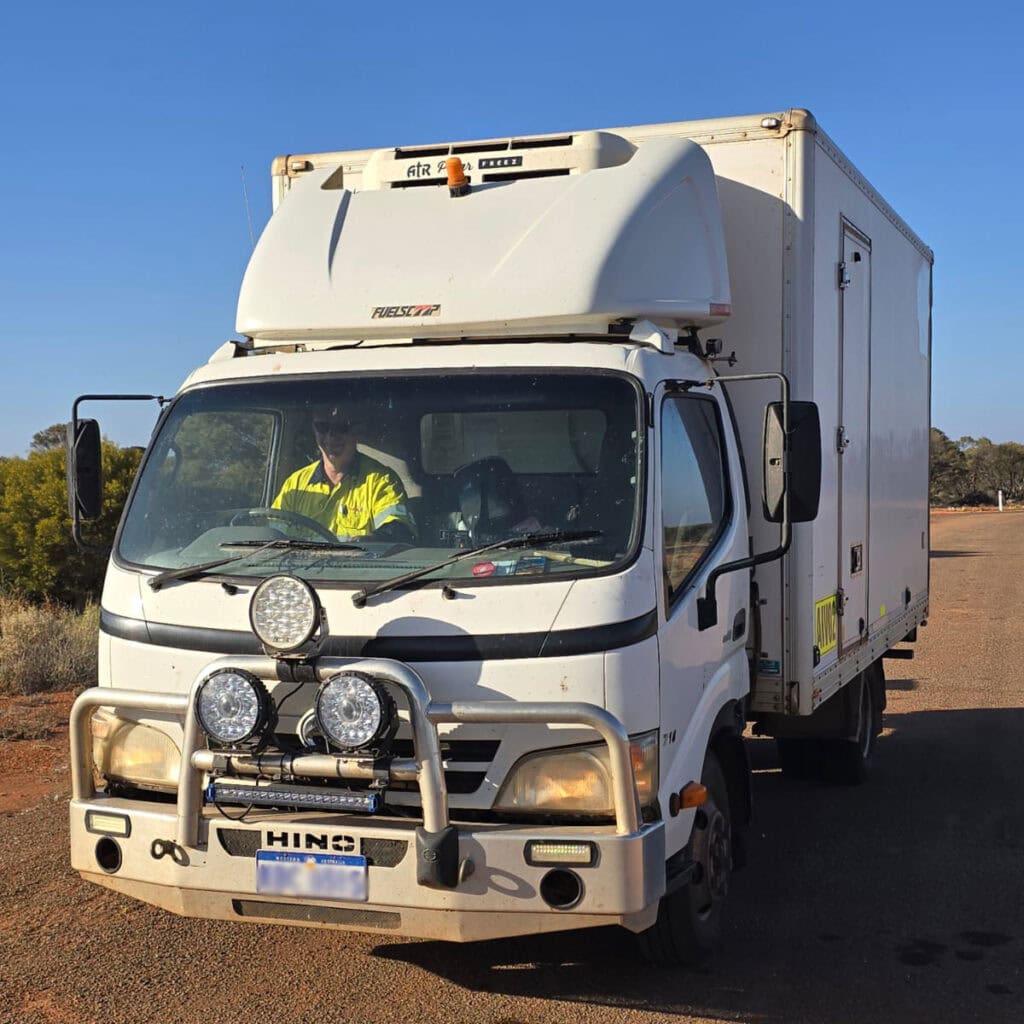
A1 Vending is based in Kalgoorlie-Boulder and services workplaces across the Eastern Goldfields hub (Kalgoorlie-Boulder, Coolgardie, Kambalda, Southern Cross and Marvel Loch) through to the northern mining corridor, including Leonora, Leinster and Laverton. For workplaces beyond these hubs, structured service runs and remote monitoring mean A1 Vending can often support sites further afield. The best way to confirm coverage is to share your location and A1 Vending will advise what’s practical.
Frequently asked questions
How long does a vending machine refrigeration repair usually take on a remote WA site?
It depends on the fault and whether the right parts are already on hand. Where a vending machine refrigeration fault can be diagnosed before the visit, technicians travel prepared with likely parts, which reduces the chance of a second trip. Remote sites naturally take longer to reach than machines closer to Kalgoorlie-Boulder, which is factored into scheduling.
Is a warm drink caused by a vending machine refrigeration fault covered by a refund or credit?
Where a transaction goes through and the product isn’t up to standard because of a vending machine refrigeration fault, it’s worth reporting it along with the fault itself. A1 Vending can look at a credit or resolution as part of addressing the underlying issue.
Do all A1 Vending machines have remote monitoring for refrigeration faults?
Remote monitoring for vending machine refrigeration faults is used where the machine and site support it, rather than being standard across every installation. It’s worth asking whether a specific machine has this capability if early fault detection matters for your site.
Can a vending machine refrigeration fault be temporary, only showing up during the hottest part of the day?
Yes. Some vending machine refrigeration systems keep up for most of the day but fall behind during peak afternoon heat, especially if the machine is exposed to direct sun. This kind of intermittent fault is still worth reporting, since it usually points to a system already working at its limit rather than something that will resolve on its own.
Does moving a machine indoors guarantee a vending machine refrigeration fault won’t happen again?
Indoor placement removes direct sun and helps with airflow, which reduces the load on the refrigeration system, but it doesn’t replace regular servicing. A machine indoors with a dust-blocked vent or an ageing compressor can still develop a vending machine refrigeration fault, just less often than one sitting in full summer sun.
Keeping vending machine refrigeration faults from costing you a summer
Vending machine refrigeration faults in WA heat are common, but they’re rarely sudden. Heat, dust and restricted airflow build up on the cooling deck over time, and catching the early signs, drinks that are cool rather than cold, a compressor running constantly, means a straightforward service visit instead of a bigger repair later. A1 Vending has serviced vending machines across Kalgoorlie-Boulder and the WA Goldfields since 1997, and knows the pattern every summer brings.
If a machine on your site is struggling to keep drinks cold, get in touch and A1 Vending will confirm whether it’s a quick fix or needs a technician on site.
Call 0407 297 200 │ Email a1.vending@bigpond.com │ Open 24 hours for fault reporting.
What to do if a vending machine payment failed
Vending Machine Maintenance: Preventing faults before they happen
What’s the Best Vending Machine Service for WA Workplaces?
Join Our Blog
Join a community that cares - subscribe for insights and updates.
"*" indicates required fields